
NAPIT Registered · Agricultural Specialists
Renewable energy
for farms & rural businesses
Solar panels, wind turbines, battery storage and complete micro grid systems — designed around your farm's energy profile and built to last.
4–7 yrs
Typical payback
90%+
Self-sufficiency achievable
25 yrs
Panel warranty
NAPIT
Registered installer
What we install
Everything your farm needs to generate its own energy
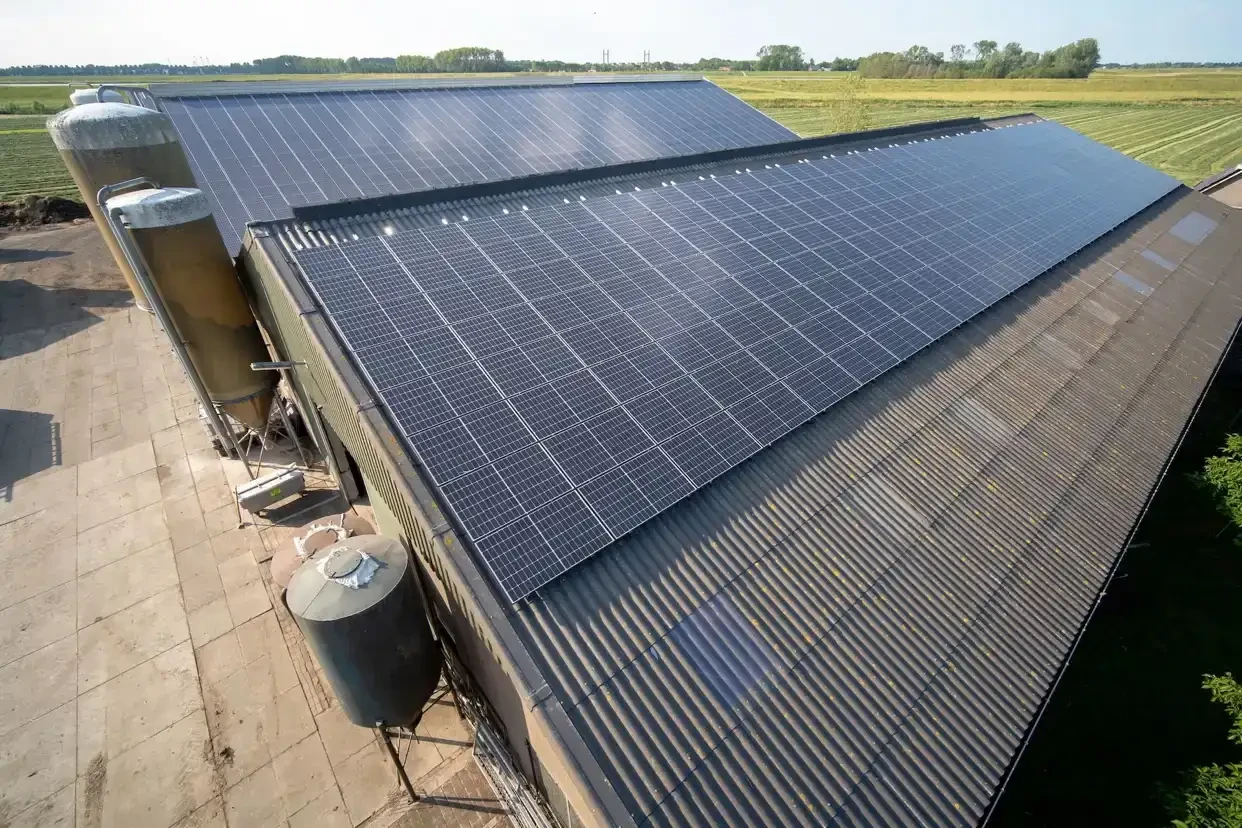
Barn roof & ground-mount solar
Solar panel installation on agricultural buildings and open land. We design and install systems from 10 kWp to 1 MWp+, optimised for your farm's energy profile and roof orientation.
Learn moreGEVI wind turbines
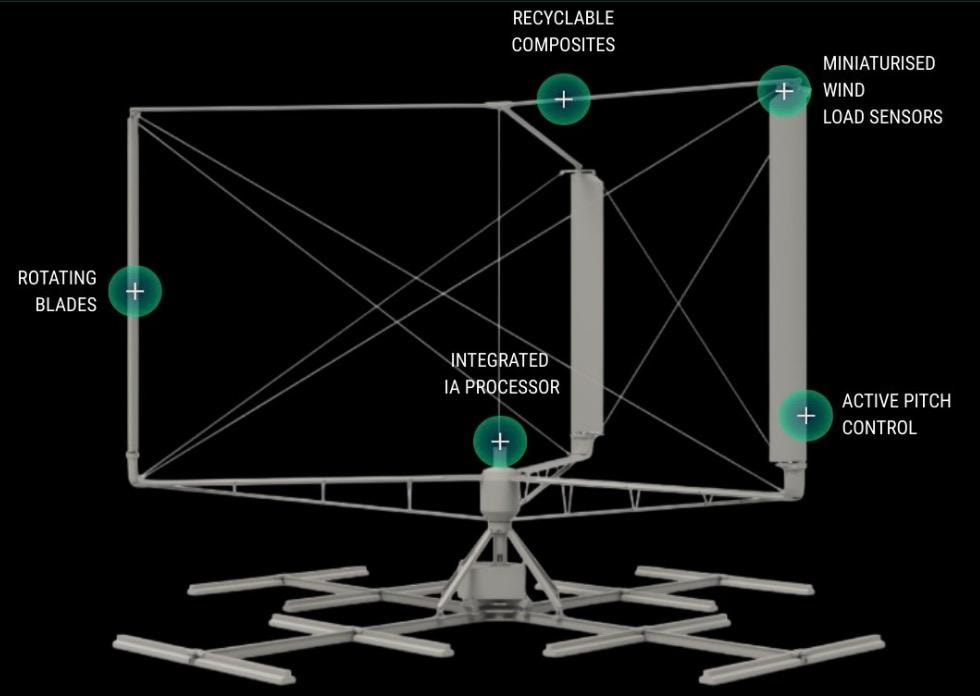
New small commercial wind turbine installations for farms and rural sites. GEVI turbines generate at night and in winter — complementing solar to deliver consistent year-round generation.
Learn moreBattery storage
Sunsynk and SolaX battery storage systems store surplus generation and deploy it during evening peaks, overnight and during grid outages. Sized to match your farm's demand profile.
Learn moreIsland mode resilience
Critical farm loads — refrigeration, ventilation, water pumps — keep running during grid outages. Island mode capability is built into every micro grid system we design.
Learn moreComplete farm micro grid
Solar, wind, battery and backup generation integrated into a single intelligent system. A central controller balances all sources in real time, maximising self-consumption and minimising grid import.
Learn moreFinance & payback analysis
We model your farm's energy consumption and generation potential, calculate payback periods and advise on capital allowances, asset finance and grant funding options.
Learn moreSolar installation
Barn roof and ground-mount solar
Agricultural buildings are ideal solar hosts. Large, unobstructed roof areas, high on-site energy consumption and favourable planning rules combine to make barn roof solar one of the most cost-effective renewable energy investments available to UK farmers.
We install on steel portal frame barns, timber-framed buildings, fibre cement and box profile roofs. Where roof condition or orientation is unsuitable, ground-mounted arrays on unproductive land — field corners, south-facing slopes, brownfield areas — deliver the same generation at lower installation cost.
We use AIKO, JA Solar and Trina panels — all Tier 1 manufacturers with 25-year product warranties — and Sunsynk or SolaX inverters. Every system is registered for the Smart Export Guarantee.


Battery storage & resilience
Store your generation. Keep running when the grid goes down.
Battery storage transforms a solar installation from a daytime-only system into a round-the-clock energy asset. Surplus generation during the day is stored and deployed during evening peaks, overnight and at weekends — dramatically increasing self-consumption and reducing grid import.
For farms, island mode capability is often as important as the financial return. A grid outage on a poultry unit, dairy farm or cold store can cause serious livestock welfare or product loss within hours. Island mode keeps critical loads running from stored energy, independently of the grid, for as long as generation and storage allow.
We install Sunsynk and SolaX battery systems — from wall-mounted residential units to containerised commercial systems for large farms. All systems are sized to your farm's demand profile and configured for island mode operation.
New wind turbine installations
GEVI wind turbines — generating when the sun doesn't shine
Solar panels are outstanding value for money, but they generate nothing at night and very little in winter. For farms with high year-round energy demand, that gap matters. Squirrel Energy installs GEVI small commercial wind turbines, designed specifically to complement solar in farm and rural commercial micro grid systems.
GEVI turbines generate continuously — day and night — with greatest output in autumn and winter, precisely when solar generation is at its lowest. Solar peaks in summer; wind peaks in winter. Together they deliver a far more consistent year-round generation profile than either technology alone, and combined with battery storage can push farm self-sufficiency to 70–85% or higher.
Real installations
Farm installations across the North of England
Poultry unit, Lancashire
150 kWp barn roof solar · 100 kWh battery · island mode
82% self-sufficiency · 4.8-year payback
A 12-shed broiler unit with high 24/7 ventilation and heating loads. Roof-mounted solar across six sheds feeds a containerised battery system. Island mode keeps ventilation running during outages — critical for livestock welfare.
Dairy farm, Yorkshire
80 kWp ground-mount solar · GEVI wind turbine · 50 kWh battery
78% self-sufficiency · 5.2-year payback
A 200-cow dairy unit with high overnight electricity demand for milking, refrigeration and water heating. The GEVI turbine charges the battery overnight; solar covers daytime demand. Combined self-sufficiency significantly exceeds what solar alone could achieve.
Arable farm, Cumbria
200 kWp ground-mount solar · 150 kWh battery · backup generator integration
71% self-sufficiency · 5.8-year payback
A large arable operation with seasonal peaks during harvest and grain drying. Ground-mount array on unproductive land. Battery storage smooths demand peaks and reduces grid import charges. Backup generator integrated for extended outages.
Costs & finance
Understanding the investment
Farm renewable energy is a capital investment with a measurable financial return. Here is what to expect.
| System type | Typical size | Indicative cost | Payback |
|---|---|---|---|
| Barn roof solar | 50–150 kWp | £40k–£120k | 4–6 years |
| Ground-mount solar | 100–500 kWp | £70k–£350k | 5–7 years |
| Battery storage | 30–200 kWh | £20k–£100k | 6–9 years |
| GEVI wind turbine | Small commercial | On application | Site dependent |
| Complete micro grid | Solar + wind + battery | On application | 4–7 years |
Capital allowances
Agricultural solar and battery storage qualifies for 100% first-year capital allowances under the Annual Investment Allowance (AIA), up to the current AIA limit. This means the full cost of the system can be deducted from taxable profit in the year of purchase, significantly reducing the net cost for profitable farming businesses.
Asset finance & hire purchase
Spread the capital cost over 3–7 years while the system generates savings from day one. At the end of the term you own the system outright. Monthly repayments are typically lower than the monthly energy savings, making the system cash-flow positive from the start.
Farming Investment Fund
The Farming Investment Fund (FIF) provides grants for productivity and sustainability improvements on UK farms. Solar panels, battery storage and energy management systems have been eligible in previous rounds. We advise on current eligibility and can support your application.
Smart Export Guarantee
All surplus electricity exported to the grid earns SEG payments. We register your system with an SEG licensee as part of the installation process. For farms with high self-consumption, SEG income is modest — but for larger ground-mount arrays with lower on-site consumption, it can be a meaningful revenue stream.
Common questions
Frequently asked questions
Is solar worth it for a farm?
Yes — farms are among the best candidates for solar in the UK. High daytime energy consumption from machinery, refrigeration, lighting and ventilation aligns well with solar generation profiles. Combined with battery storage and a wind turbine, farms can achieve 70–90%+ self-sufficiency. Agricultural solar also benefits from favourable planning rules and may qualify for capital allowances.
What is the payback period for farm solar?
Typical payback for a farm solar installation is 4–7 years, depending on system size, energy consumption and whether battery storage is included. Farms with high daytime energy use — poultry units, dairy farms, grain driers — tend to see the fastest payback because they consume most of the generation directly rather than exporting it.
Do I need planning permission for farm solar?
Roof-mounted solar on agricultural buildings generally falls within permitted development rights and does not require planning permission, subject to size limits. Ground-mounted arrays above certain sizes may require planning consent. We advise on planning requirements as part of our free site survey and handle the application process where needed.
What is island mode and why does it matter for farms?
Island mode allows your farm to operate independently of the grid during a power cut. Critical loads — refrigeration, ventilation, water pumps, lighting — continue running from your battery storage and generation sources. For livestock farms in particular, grid outages can be catastrophic; island mode provides resilience against them.
Can I add a wind turbine to my existing solar system?
Yes — GEVI wind turbines integrate with existing solar and battery storage systems via a micro grid controller. Wind generation complements solar by generating at night and in winter when solar output is lowest, significantly increasing overall self-sufficiency.
What finance options are available for farm renewables?
Options include outright purchase (fastest payback, eligible for capital allowances), asset finance and hire purchase (spread the cost, own the system at the end), and the Farming Investment Fund grant scheme for eligible agricultural businesses. We can advise on the most suitable option for your farm and introduce you to specialist agricultural finance providers.
Free site survey
Ready to cut your farm's energy bills?
We'll carry out a free site survey, model your energy consumption and generation potential, and design a system tailored to your farm's needs and budget.