
Last Updated: October 26, 2026
Quick Summary
Battery storage support is the planned and reactive service that keeps a commercial battery energy storage system safe, efficient and available throughout its working life. It should include scheduled inspections, continuous remote monitoring, defined fault response times and clear reporting, all set out in writing in your service contract.
- Light commercial sites typically need an annual on-site inspection with continuous remote monitoring.
- Heavy commercial and agricultural micro-grid systems usually need twice-yearly on-site inspections.
- A service contract should define scope, inspection schedule, response times, monitoring, reporting and exit terms.
- Ask for a sample annual state-of-health report you can show your board.
- Confirm in writing who handles warranty claims with the manufacturer on your behalf.
Table of Contents
- What Commercial Battery Storage Support Actually Covers
- Your Battery Energy Storage System Maintenance Checklist
- Battery Storage System Inspection Frequency: How Often Is Enough?
- Battery Storage Fault Response Times You Should Expect
- What a Commercial Battery Storage Service Contract Should Contain
- Support Performance Measures to Hold Your Provider To
- Questions to Ask Before You Sign a Support Agreement
- Frequently Asked Questions
What Commercial Battery Storage Support Actually Covers
Commercial battery storage maintenance support expectations start with a simple truth: the contract you sign after installation matters as much as the hardware itself. At Squirrel Energy, we design and install solar and battery systems. What protects your investment is the support wrapped around them.
Battery storage support is the planned and reactive service that keeps a commercial battery energy storage system safe, efficient and available throughout its working life.
Most buyers focus on the capital cost and forget to ask what happens in year three when a cell drifts out of balance or an inverter throws a fault at 6am. That gap is where energy independence quietly erodes.
Below, we discuss what to consider in a support arrangement before you sign.
Your Battery Energy Storage System Maintenance Checklist
A battery energy storage system maintenance checklist should cover both the physical condition of the equipment and the software that governs how it performs. A useful checklist splits into what a technician inspects on site and what your provider reviews remotely. Establishing a routine for battery storage maintenance ensures that these distinct operational layers remain synchronised to prevent premature degradation of the system components.
Here is a checklist to consider:
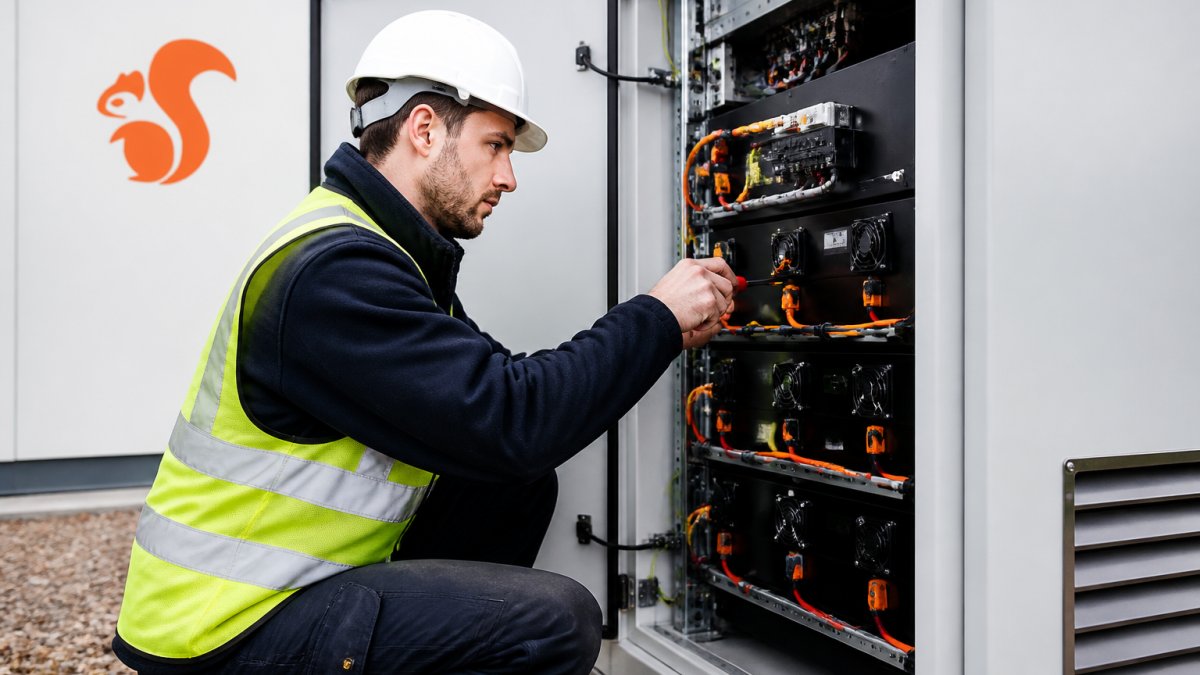
- Visual inspection of battery cabinets, enclosures and cable entries for damage or corrosion
- Thermal imaging of cells, busbars and connections to spot hotspots
- Torque checks on DC and AC terminations
- Verification of ventilation, cooling and humidity control
- State-of-health and state-of-charge reporting from the battery management system
- Inverter and hybrid inverter diagnostics, including firmware version checks
- Emergency stop, isolation and fire suppression system testing
- Review of alarm logs and fault history since the last visit
- Confirmation that earthing and labelling still meet current standards
What a Technician Checks On Site
Ask your provider whether they record readings against a baseline. A checklist that gets ticked but never compared to last year's data tells you very little.
Battery Storage System Inspection Frequency: How Often Is Enough?
A sensible pattern looks like this:
| System type | On-site inspection | Remote monitoring | Best for |
|---|---|---|---|
| Light commercial | Annual | Continuous | Offices, small retail |
| Heavy commercial | Twice yearly | Continuous | Warehouses, manufacturing |
| Agricultural micro-grid | Twice yearly | Continuous | Farms with critical loads |
If you are unsure where your site sits, a free energy audit may help assess your energy needs.
Battery Storage Fault Response Times You Should Expect
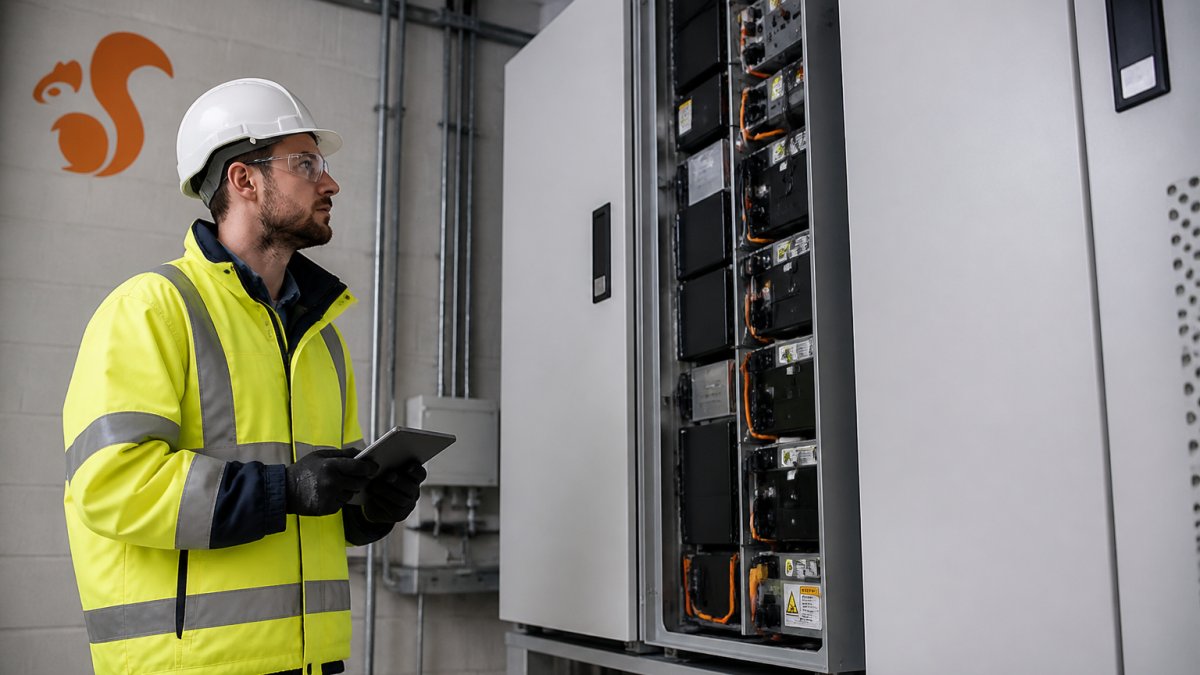
When comparing support arrangements, consider whether fault response times are defined in writing, including targets for remote diagnosis and on-site attendance.
Remote Monitoring and What It Changes
If fault response ever falls short of what was promised, you should know how to raise it formally. Our complaints policy sets out how we handle issues fairly and promptly.
What a Commercial Battery Storage Service Contract Should Contain
When reviewing a commercial battery storage service contract, consider its scope, schedule, response times and price, including what sits outside it.
Consider these elements before signing:
- Defined scope: which components are covered and which are excluded
- Inspection schedule: dates or frequency, in writing
- Response times: tiered by severity, with hours stated
- Monitoring: what is watched and how alerts reach you
- Reporting: an annual state-of-health report you can show your board
- Warranty administration: who deals with the manufacturer on your behalf
- Exit terms: what happens if you switch provider
If you want to see how a full commercial solar and battery storage arrangement fits together, including Smart Export Guarantee registration, you can explore our commercial solar and battery storage offering and request an energy audit.
Support Performance Measures to Hold Your Provider To
Support performance measures turn a contract from a promise into something measurable. Without them, you have no way to know whether the service is actually being delivered.
It also helps to understand what reliable support is protecting. Our commercial battery storage ROI analysis explains factors relevant to financial returns.
Questions to Ask Before You Sign a Support Agreement
Ask these questions before you sign anything, and insist on written answers:
- What exactly is included, and what costs extra?
- What are your response times for an emergency fault versus a routine alert?
- Who monitors the system, and how quickly are alerts acted on?
- Can you show me a sample annual report?
- How do you handle warranty claims with the manufacturer?
- What happens if I want to leave?
Squirrel Energy designs and installs MCS-certified solar and battery storage, is Sunsynk and SolaX approved, and is Smart Export Guarantee registered. Contact Squirrel Energy to discuss your energy needs.
Frequently Asked Questions
How often should a commercial battery storage system be maintained?
Most commercial systems need a remote health check monthly and a physical inspection once or twice a year. Inspection frequency rises if the system cycles heavily, sits in a dusty or damp plant room, or backs up a critical load. Ask your provider to set the schedule against your actual duty cycle rather than a generic calendar, and get the agreed intervals written into the service contract so they cannot drift.
How quickly should a provider respond to a battery storage fault?
Response times should be split by severity. A total outage or safety alarm warrants a remote diagnosis within a few hours and an engineer on site the same or next working day. A performance drop, such as reduced capacity, can wait a few working days. Get these tiers named in the contract, along with what counts as an emergency and who you call out of hours.
What should a commercial battery storage service contract include?
Look for scheduled inspections, remote monitoring, tiered fault response times, firmware and software updates, warranty administration, and a clear list of what is excluded. Confirm whether labour and parts are covered and how escalation works if a fault is not fixed first time. A good contract also states how quickly the provider reports performance data, so you can see whether the system is earning its keep.
Can a battery storage system be maintained while it is still operating?
Much of the routine work, including monitoring checks and firmware updates, happens remotely with no interruption. Physical inspections usually need the system isolated for a short period, often under an hour for a standard visit. Ask your provider to schedule these around your load profile, for example outside production hours or before a grain drying run, so the site keeps running and you are not left without backup power.
