
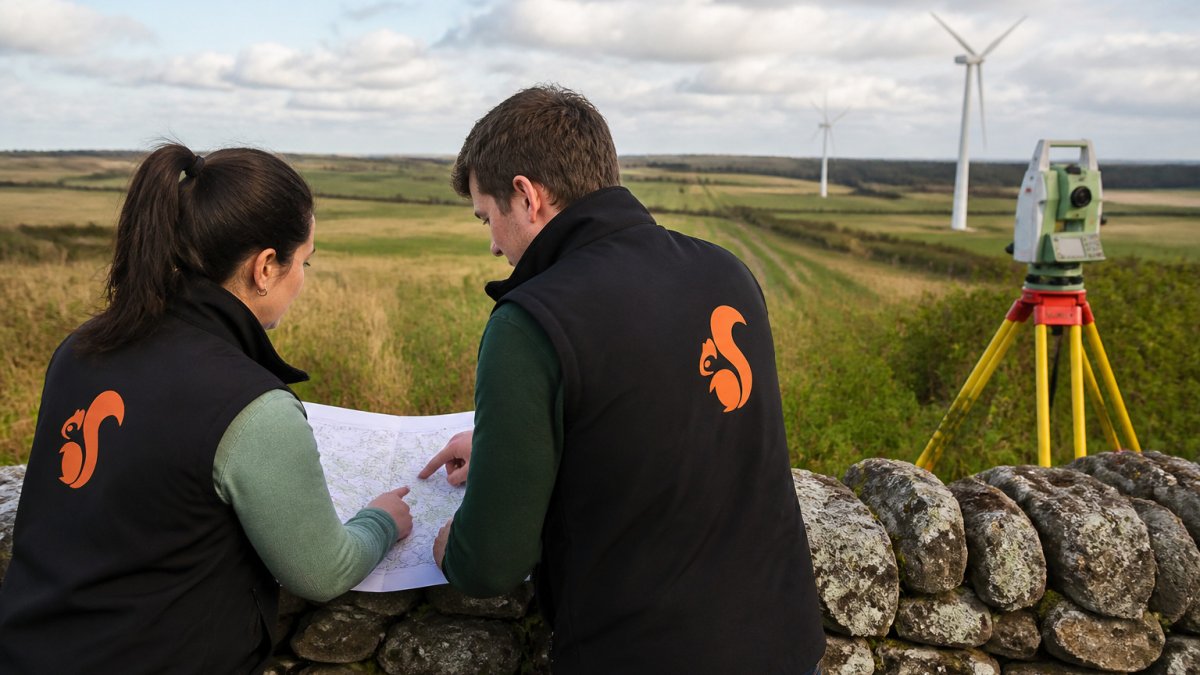
Last Updated: November 2, 2026
Quick Summary
A renewable energy site survey is a physical and technical assessment of a property to establish whether solar panels, battery storage or other low-carbon systems can be installed safely and profitably. It measures roof or ground space, checks structural capacity, records daily energy use and reviews the grid connection.
- Surveyors measure roof or ground space, which sets the maximum system size.
- Structural capacity is checked, since solar arrays add weight and older roofs may need reinforcement.
- Logging energy usage over several weeks gives a more reliable picture than a single bill.
- Ask for a breakdown of the assumptions behind any payback estimate before relying on it.
- Gather your last twelve months of electricity and gas bills before the survey visit.
Table of Contents
- What a Renewable Energy Site Survey Covers
- How Much a Solar Survey Costs in the UK and What Affects It
- Preparing Your Site Before the Visit
- Assessing Solar Roofs, Ground Mounts and Structural Limits
- Battery Storage Site Survey Requirements
- From Survey to Feasibility Study: What the Report Contains
- Booking Your Renewable Energy Site Survey with Squirrel Energy
- Frequently Asked Questions
What a Renewable Energy Site Survey Covers
A renewable energy site survey is a physical and technical assessment of a property to establish whether solar panels, battery storage or other low-carbon systems can be installed safely and profitably. The aim is always the same: a clear, evidence-based answer on what a site can deliver.
The survey looks at four things. It measures roof or ground space, checks the structure that will carry the load, records how the building uses energy throughout the day, and reviews the electrical connection to the grid. Each of these shapes the system size and the expected return.
Daytime consumption, not total annual usage, often decides whether a solar array pays back quickly. Logging usage across several weeks gives a more reliable picture than relying on a single bill.
The survey assesses four key areas, and the table below summarises what each one checks and why it matters.
| Survey area | What is checked | Why it matters |
|---|---|---|
| Roof or ground space | Physical area available | Sets the maximum system size |
| Structure | Load-bearing capacity | Shows whether the roof can take the system |
| Energy use | Daily consumption pattern | Shows how much output the site will use itself |
| Grid connection | Electrical link to the grid | Shapes system size and expected return |
How Much a Solar Survey Costs in the UK and What Affects It
Survey costs depend on the size and complexity of the site, the number of systems being assessed and whether the work includes a full feasibility study. For current pricing, contact Squirrel Energy directly for a quote tailored to your property.
Several factors tend to move the scope of a survey. A large warehouse with a complex roof takes longer to survey than a standard domestic property. Sites that need ground-mount assessments, or that combine solar with battery storage and micro-grid planning, require more detailed analysis.
The Microgeneration Certification Scheme (MCS) sets the technical standards that installers follow, and a survey carried out to those standards helps keep the process consistent. You can read the scheme's requirements on the MCS official standards and installer requirements website.
To estimate what a system on your own roof might generate, you can use our [page:1]. It provides a rough starting point before you commit to a full survey.
Preparing Your Site Before the Visit
Good preparation shortens the survey and improves the quality of the results. Start by gathering your last twelve months of energy bills, ideally from both electricity and gas, so the surveyor can see seasonal patterns.
Next, note how the site uses power during the working day. Identify your highest-consumption equipment, such as compressors, refrigeration, grain dryers or machinery, and when it runs. This information helps size a battery and decide whether self-consumption will be high enough to justify the investment.
Clear access matters too. Make sure the roof hatch, loft space or plant room can be reached safely, and confirm who will be on site to answer questions about operations. A common mistake is letting the survey happen without anyone who understands the building's demand patterns.
Finally, check any planning restrictions or listed-building status in advance. These can affect where panels or ground mounts are allowed.
Assessing Solar Roofs, Ground Mounts and Structural Limits
The surveyor first checks roof orientation, pitch and shading. South-facing roofs with minimal obstruction usually perform best in the UK, though east and west orientations can still work well for self-consumption. Shading from trees, neighbouring buildings or plant equipment can reduce output significantly, so it is measured rather than estimated.
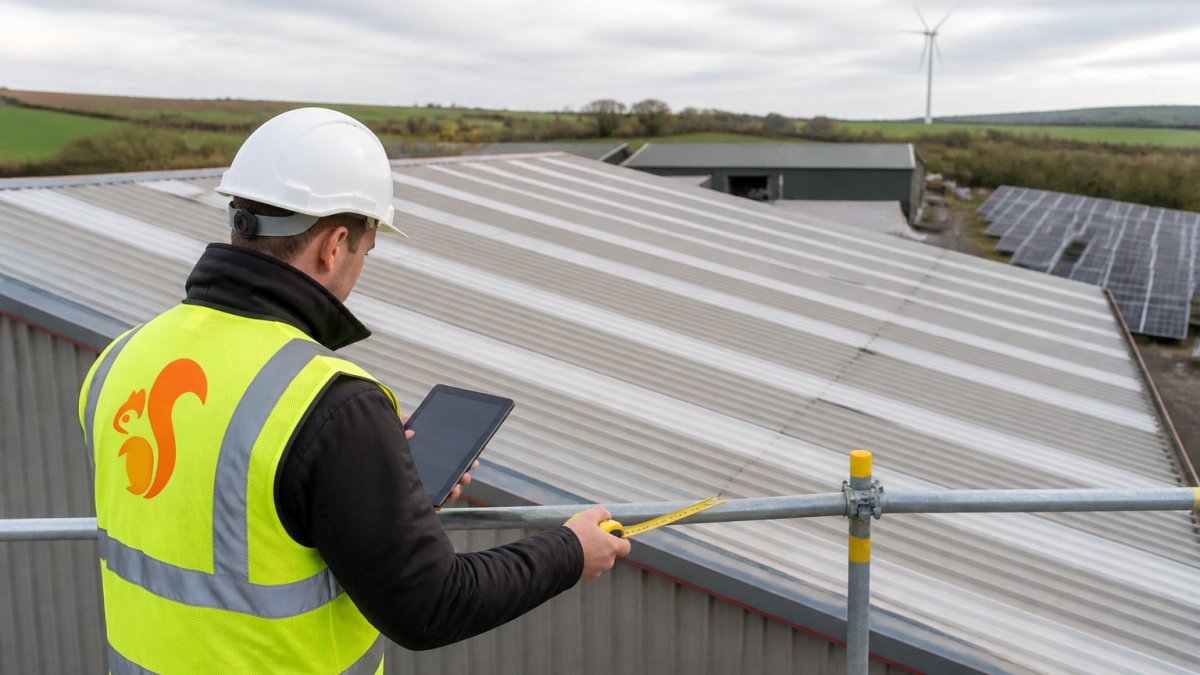
Structural capacity comes next. Solar arrays add weight, and older roofs may need reinforcement before installation. Surveyors check the condition of the roof covering, the rafters or trusses and any fixings. Where the structure cannot safely carry the load, we say so and look at alternatives such as ground mounts, which need enough open land and suitable ground conditions.
Ground-mounted systems suit farms and large sites with spare land. They are easier to access for cleaning and maintenance, but they involve groundworks, planning considerations and cable routing that add to the project scope.
Structural limits are a real constraint. If a roof cannot take a system, a sound survey helps avoid an expensive mistake.
Battery Storage Site Survey Requirements
Battery storage adds a second layer to the survey. The surveyor needs to know where the battery will sit, how much ventilation the space has, and whether the temperature stays within the manufacturer's operating range. Garages, plant rooms and dedicated cabinets are common locations, each with its own requirements.
Usage data drives the sizing decision. A battery that is too small wastes solar output, while one that is too large adds cost without much extra benefit. The survey models daily consumption against generation to recommend a capacity that fits the site.
Backup power during grid outages is another consideration. If you need critical loads to stay live during a power cut, the survey identifies which circuits to protect and whether the system can island safely. Many businesses find this a significant factor in choosing storage at all.
Battery technology changes quickly. Choosing equipment that is compatible with the inverter and able to take firmware updates reduces the risk of being left with a system that cannot be extended later.
From Survey to Feasibility Study: What the Report Contains
The survey data feeds into a feasibility study. A useful report sets out the recommended system size, the expected annual generation, the share of energy the site will use itself and the projected savings.
Payback is the figure most decision-makers focus on. Actual returns depend on your tariff, how much of the output you use on site, and how energy prices move. Ask for the assumptions behind any payback estimate before relying on it.
The report should also cover structural findings, any planning or grid-connection steps, and a clear timeline. For guidance on system sizing, returns and what to ask your installer, see Choosing Solar & Battery Storage. Ask for a breakdown of each assumption so you can test the numbers against your own bills.
Once you have the report, you can compare it with other quotes on a like-for-like basis. Look at the same system size, the same assumptions and the same warranty terms.
Booking Your Renewable Energy Site Survey with Squirrel Energy
Booking a renewable energy site survey is straightforward. Contact Squirrel Energy to arrange a visit, and we will confirm a date, the information we need from you and who should be on site.
If you are a homeowner, a farm or a commercial site, the survey starts with the same question: what can this property realistically generate and save? Our MCS-certified team answers it with measured data, not guesswork. Our installers are approved for Sunsynk and SolaX systems, and we are registered under the Smart Export Guarantee.
For a free energy audit, call us today or use our [page:4] guide to plan your next step. For current pricing and availability, contact Squirrel Energy before you book, as costs depend on your site.
Frequently Asked Questions
What happens during a renewable energy site survey?
A renewable energy site survey is an on-site visit where an engineer checks the building or land before any system is designed. The surveyor measures roof pitch, orientation, shading and structural load, reviews your half-hourly electricity usage and the connection to your distribution network, and notes access routes and any planning or grid constraints. Findings feed directly into a system design and a quote, so the survey is the step that turns an estimate into a deliverable plan.
Is a renewable energy site survey free?
Squirrel Energy offers free energy audits and feasibility studies. Because the scope depends on the size and complexity of your site, the best way to confirm what is included for your premises is to contact Squirrel Energy directly through its website and ask for a quote.
What should I prepare before a site survey?
Gather at least twelve months of electricity and gas bills, or half-hourly smart meter data if you have it, so the surveyor can size the system to your real demand. Have roof plans, building age and any previous electrical certificates to hand, and clear access to the roof, loft, plant room and consumer unit. If you farm or run machinery, note peak loads such as grain driers or refrigeration, as these shape battery and micro-grid design.
Can a site survey assess solar panels, battery storage and wind turbines?
Yes. A survey can assess all three, but each needs different checks. Solar depends on roof structure, orientation and shading. Battery storage depends on the space, ventilation and electrical capacity of the installation point. Wind turbines depend on wind resource, height limits and planning constraints.
Ready to find out what your site can generate? Get in touch with Squirrel Energy to arrange your survey and receive a tailored feasibility study.
