
Last Updated: 30 October 2026
Quick Summary
A bespoke wind turbine system is designed around your own site rather than bought off the shelf. Designers match turbine size, tower height, battery storage and controls to how your site uses energy, the wind resource, and your goals.
- Four core inputs: wind resource, energy demand, physical site and your goal
- Measure wind at hub height over time, not by guessing
- Size the turbine to your real demand, using both average and peak use
- Battery storage lets a smaller turbine cover more of your needs
- Check planning rules with your local authority before you buy
Table of Contents
- What a Bespoke Wind Turbine System Involves
- Carrying Out a Wind Turbine Site Assessment
- Sizing the Turbine to Your Energy Demand
- Checking Wind Turbine Planning Permission UK Rules
- Designing a Wind Turbine and Solar Hybrid System
- Understanding Small Wind Turbine Cost UK Factors
- Booking a Free Feasibility Study for Your Site
- Frequently Asked Questions
What a Bespoke Wind Turbine System Involves
Designing a bespoke wind turbine system means building the setup around your own site, not buying a box off a shelf. Every bespoke project starts by asking how your site uses energy, when it uses it, and what you want from the system. A bespoke wind turbine system design is the process of matching turbine size, tower height, battery storage and controls to that answer.
Off-the-shelf systems assume a typical site. Most sites are not typical. Wind speeds change across a field, buildings create turbulence, and a farm's energy demand may peak at very different times from a warehouse's. A bespoke design accounts for all of this before a single component is ordered.
A bespoke design typically covers four things:
- The wind resource: how strong and steady the wind is at your site
- The energy demand: how much power you use, and when
- The physical site: space, access, obstacles and grid connection
- The goal: cutting bills, backup power, or high self-sufficiency
Get these four right and the rest of the design follows. Get one wrong and the system underperforms for years.
Carrying Out a Wind Turbine Site Assessment
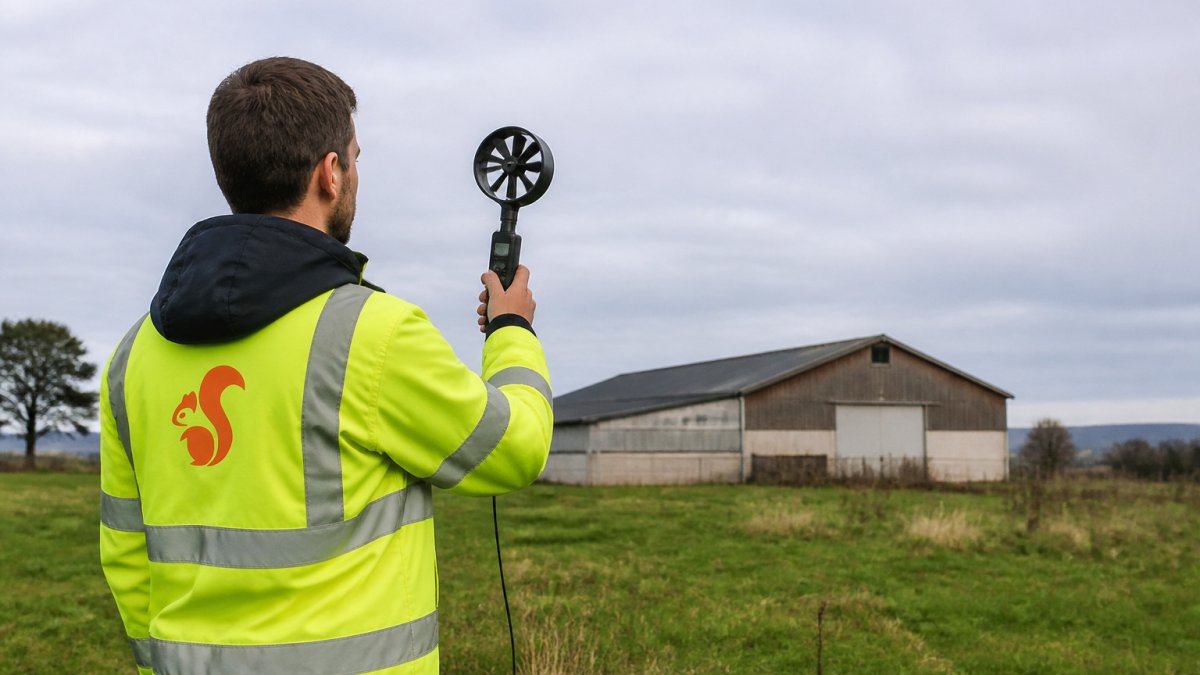
A site assessment tells you whether wind power makes sense at all. Start by measuring the wind, not guessing at it. A short-term wind survey using a handheld anemometer gives a first reading, but a longer monitoring period gives a far more reliable picture.
Look beyond the open field. Trees, hedgerows, barns and nearby buildings can block or disturb airflow. Turbulence near obstacles reduces output and adds wear to the machine. A common mistake is placing a turbine too close to a building because the spot is convenient for the cable run.
Check these points during the assessment:
- Average wind speed at hub height, measured over time
- Distance to obstacles, ideally several times the obstacle's height
- Ground conditions for foundations
- Access for delivery, lifting equipment and future maintenance
- Connection point to your existing electrical supply
Wind is the big variable here, and it is hard to predict. That is why a proper assessment matters more than a quick estimate.
The article's checklist for a site assessment covers these points, each worth confirming before any design work begins.
| Check | What to look for | Why it matters |
|---|---|---|
| Average wind speed | Measured at hub height over time | Sets realistic output |
| Obstacles | Distance several times obstacle height | Turbulence cuts output and adds wear |
| Ground conditions | Suitability for foundations | Affects build cost and stability |
| Access | Delivery, lifting and maintenance routes | Needed for install and upkeep |
| Grid connection | Connection point to existing supply | Determines wiring and integration |
Sizing the Turbine to Your Energy Demand
Turbine size should follow your energy use, not the other way round. Start with a year of meter readings or bills, and look at both your average use and your peak use. Average use shows how much energy you need over time. Peak use shows how much power the system must handle at its busiest.
Many businesses oversize their turbine because it feels like the safe choice. Oversizing costs money up front and can leave turbines running below their best. Undersizing means you still buy most of your power from the grid. The aim is a system that matches your real demand.
Battery storage changes the sum. A battery can hold surplus power from windy periods and release it when the wind drops. This lets a smaller turbine cover more of your needs.
Checking Wind Turbine Planning Permission UK Rules
Planning rules for wind turbines in the UK depend on turbine height, location and local policy, so check them early. Your local planning authority is the first point of contact. Smaller turbines can sometimes fall under permitted development rights, but this depends on your site and the turbine's specification.
Neighbours, nearby homes and protected landscapes can all affect the outcome. Noise, visual impact and shadow flicker are common concerns that planners consider. Raising these with your local authority before you commit saves time and avoids a refused application.
Confirm the current rules with your local planning authority or the official planning portal before you buy. Requirements change, and a design that works today may need adjusting.
Designing a Wind Turbine and Solar Hybrid System
Combining wind and solar often gives steadier output than either technology alone. Solar tends to produce most on sunny days, while wind can be strong at night and in winter. Together, they cover more hours of the day. Integrating these complementary sources requires careful attention to solar inverter technical specs to ensure that the combined energy flow remains stable and efficient across varying generation profiles.
This pairing works best with battery storage. The battery smooths out the gaps between the two sources and keeps power available when both are quiet. Many farms and rural businesses use this setup to reduce grid dependence.
Watch out: a hybrid system needs careful control logic. Without it, the turbine, solar array and battery can fight each other, wasting energy and shortening equipment life.
Practical design choices include:
- Turbine placement: away from solar arrays to avoid shading and turbulence issues
- Battery size: matched to your overnight and low-wind demand
- Controller: able to prioritise sources based on cost, availability and demand
- Backup generation: for long calm periods or grid outages
Understanding Small Wind Turbine Cost UK Factors
The cost of a small wind turbine system depends on several factors, so there is no single figure that applies to every site. Key drivers include turbine size, tower height, foundations, battery capacity, installation complexity and grid connection work. Site access and planning requirements can also add to the total.
Qualified guidance is more useful here than a headline price. Ask any installer to break the quote into its parts, so you can see what drives the cost and where you could make savings.
Pricing depends on your site, your energy demand and the components chosen. Visit the Squirrel Energy website for current information or request a quote tailored to your project.
Booking a Free Feasibility Study for Your Site
The fastest way to find out whether a bespoke wind turbine system suits your site is a feasibility study. Squirrel Energy offers free energy audits and feasibility studies, so you can see the numbers before you commit to anything.
A feasibility study typically reviews your energy use, wind resource, site layout and grid connection. It shows you which options are realistic and what each might deliver. You can then decide on the next step with clear information.
Contact the Squirrel Energy team to arrange a free feasibility study for your site.
Frequently Asked Questions
How is a bespoke wind turbine system designed?
Design starts with a site survey that measures wind speed, turbulence and obstacles, followed by an energy audit of your daily and seasonal demand. Designers then select a turbine height and rotor size that suit the wind resource, check structural and electrical requirements, and model how the turbine will work with any solar panels or battery storage. The result is a system sized to your actual load, with a feasibility study setting out expected output before any commitment is made.
Is my site in Burnley suitable for a small wind turbine?
Suitability depends on the average wind speed at your hub height, the distance to buildings and trees, and the local landscape. Sites that are exposed and elevated tend to perform best, while sheltered valley floors often do not. A site assessment that includes wind measurement is the only reliable way to judge suitability for a specific location in Burnley. Squirrel Energy offers free energy audits and feasibility studies, and you can request one through the company website.
Do I need planning permission for a wind turbine in England?
Many small turbines fall under permitted development rights, but height limits, the position of the turbine relative to your boundary, conservation areas and listed buildings can all change that. Some sites need full planning permission from your local planning authority. Check with the council before ordering equipment, and ask your installer to confirm how the proposal fits the rules that apply in England.
Can a wind turbine work with solar panels and battery storage?
Yes. Wind and solar often peak at different times, with wind frequently stronger in winter and at night, so combining them smooths output across the year. A battery store captures surplus generation and releases it when demand is high or the wind drops. Squirrel Energy designs integrated systems of this kind, including farm micro-grids.
Ready to see what a bespoke design could do for your site? Contact Squirrel Energy today for a free feasibility study, and let us show you the options that fit your energy demand and budget.
