
Last Updated: 24 November 2026
Quick Summary
Future proofing battery storage in 2026 means designing a system that can accept larger capacity, newer inverter firmware and smarter controls later without replacing the core hardware. Size against actual site consumption with headroom for growth, and check compatibility with existing solar inverters, EV chargers and heat pumps before you sign.
- A well-installed lithium battery storage system can run for a decade or more with the right design.
- Ask for cycle count and capacity retention together, as years alone tell you very little.
- Modular architecture with spare inverter input capacity makes adding battery modules straightforward.
- Confirm the battery management system supports documented, open communication protocols before buying.
- Agree who handles removal and recycling at end of life, as UK waste batteries are regulated as hazardous waste.
Table of Contents
- What does future proofing battery storage systems in 2026 mean?
- Battery energy storage system design that leaves room to grow
- Battery storage system lifespan and what shortens it
- Scalable battery storage systems and upgrade paths
- The battery management system as the upgrade engine
- A practical future-proofing checklist for Burnley sites
- Book a free energy audit with Squirrel Energy
- Frequently Asked Questions
What does future proofing battery storage systems in 2026 mean?
Future proofing battery storage systems in 2026 means designing a battery energy storage system that can accept larger capacity, newer inverter firmware and smarter controls later, without replacing the core hardware.
That single idea separates a good installation from an expensive one. Battery technology is moving quickly.
Here is the part most guides get wrong. Future proofing is not about buying the biggest battery you can afford.
Below, we explain what a genuinely future-proof design looks like, what shortens battery life, and how to plan upgrades before you sign anything.
Battery energy storage system design that leaves room to grow
Good battery energy storage system design starts with the load, not the battery. A well-designed system is sized against what a site actually consumes across a full year, leaving headroom for future demand.
That headroom matters more than most people expect. A farm adding grain drying capacity, or a warehouse adding refrigeration, will see consumption climb. If the inverter and switchgear were sized to the millimetre, the only upgrade route is replacement.
Sizing for today and headroom for tomorrow
Sizing follows three numbers: peak demand in kilowatts, daily consumption in kilowatt hours, and the shape of the load across the day. A well-designed system matches all three, then adds capacity for planned growth.
Practical limits are worth checking early. Does the incoming supply have spare capacity? Is there physical space for another battery cabinet? Can the consumer unit and distribution board take additional circuits? Answering these before installation is far cheaper than answering them afterwards.
Battery storage system lifespan and what shortens it
A well-installed lithium battery storage system can run for a decade or more, but lifespan depends heavily on how it is used and where it sits.
Watch out: installing a battery in an unheated outbuilding that swings between freezing and warm is one of the most common mistakes we see on farm sites. It shortens life and can void warranties.
Depth of discharge matters too. Constantly running a battery from full to empty wears it faster than gentler cycles.
Capacity retention, not just years
Lifespan is usually quoted as a number of years, but the figure that actually matters is capacity retention: how much of the original usable energy the battery still delivers after a given number of cycles. Comparing retention over time also clarifies how much dependable capacity a whole home battery backup can provide as household needs change.
Temperature is the lever most within your control. Lithium cells dislike sustained heat more than they dislike the cold, and a plant room that bakes in summer will age a battery faster than a cool, stable one. Ventilation, shading and keeping the cabinet away from south-facing glazing all help.
Warranties, exclusions and end-of-life planning
Warranties vary widely. Some cover throughput, some cover years, and some cover both.
End-of-life planning is the piece almost everyone skips.
Safety is part of the same conversation. A competent installer will design to the relevant UK electrical standards, including BS 7671 for the fixed wiring (BS 7671 - Requirements for Electrical Installations).
Lifespan depends on how the battery is used and where it sits, so these are the factors to weigh before specifying a system.
| Factor | Effect on lifespan | Note |
|---|---|---|
| Heat | Ages the battery faster | Lithium cells dislike sustained heat more than cold |
| Deep cycling | Wears the battery faster | Gentler cycles within a middle band last longer |
| Poor ventilation | Shortens life | Ventilation, shading and avoiding south-facing glazing help |
| Frost-risk placement | Shortens life and can void warranties | Unheated outbuildings that swing between freezing and warm |
| Capacity retention | Decides real usable energy | Ask for cycle count and retention figure together |
| Warranty exclusions | Can leave claims unpaid | Incorrect installation, out-of-range temperatures, unauthorised firmware |
Scalable battery storage systems and upgrade paths
Scalable battery storage systems generally share one trait: modular architecture. Capacity is added in matched units, the inverter has spare input capacity, and the controls recognise new modules without a full reconfiguration.
The upgrade path usually runs in one of three directions:
- More capacity: adding battery modules to extend storage duration.
- More power: adding or replacing inverters to handle higher peak demand.
- More intelligence: updating controls and firmware to work with new tariffs and smart functionality.
Interoperability is the deciding factor. A system locked to one manufacturer's proprietary protocol is only as upgradeable as that manufacturer allows. Systems built on open standards give you choices later.
Checking compatibility before you buy
Most upgrade disappointments trace back to a compatibility question nobody asked at the specification stage. Before you commit, work through the equipment you already have or plan to add:
- Existing solar inverter: confirm the battery can communicate with your inverter, not just sit alongside it. Ask for the specific protocol and whether the manufacturer documents it. A battery that cannot see your generation data cannot optimise self-consumption properly.
- EV charger: if you plan to charge an electric vehicle at home or on site, check whether the controls can coordinate charging with battery state of charge, so the car does not drain the battery you wanted for the evening peak.
- Heat pump: a heat pump adds a large, weather-dependent load. Confirm the system can be configured to prioritise the heat pump in cold spells without stranding the battery empty.
- Tariff and smart functionality: check that the controls platform can be reconfigured for a new tariff or price signal without new hardware. This is the practical test of smart functionality, and it is where proprietary systems often fall short.
- Future equipment: ask the installer what happens when a new battery module, inverter or controls update arrives in three years. If the answer is a full replacement, the system is not scalable in any meaningful sense.
A useful discipline is to write the compatibility checks into the specification before signing. That way the installer is accountable for the upgrade path, not just the initial installation.
The physical and electrical headroom
Upgradeability is not only a software question. The plant room needs physical space for another cabinet, the containment needs spare capacity for additional cable, and the incoming supply needs headroom for the extra load. On constrained commercial sites in Burnley and across Lancashire, these practical limits often decide the design more than the battery datasheet does. Planning them now is far cheaper than reworking them later.
If you are weighing long-term value against payback, our commercial battery storage ROI analysis sets out the factors that decide whether an upgrade is worth funding.
The battery management system as the upgrade engine
The battery management system is the electronics layer that monitors cells, balances charge and controls how the battery charges and discharges. It is the component that decides whether an upgrade is straightforward or impossible.
Smart controls, tariffs and automated energy management
Smart controls turn a passive battery into an active asset. Automated energy management charges when tariffs are low and discharges at peak demand, which is where much of the saving comes from.
Tariff products change. A controls platform that can be reconfigured for a new tariff, rather than replaced, protects the investment. That is the practical test of smart functionality: can it learn a new price signal without new hardware?
A practical future-proofing checklist for Burnley sites
Burnley properties bring their own quirks. Stone-built farm buildings, older industrial units and terraced commercial premises generally need a survey before a battery is specified.
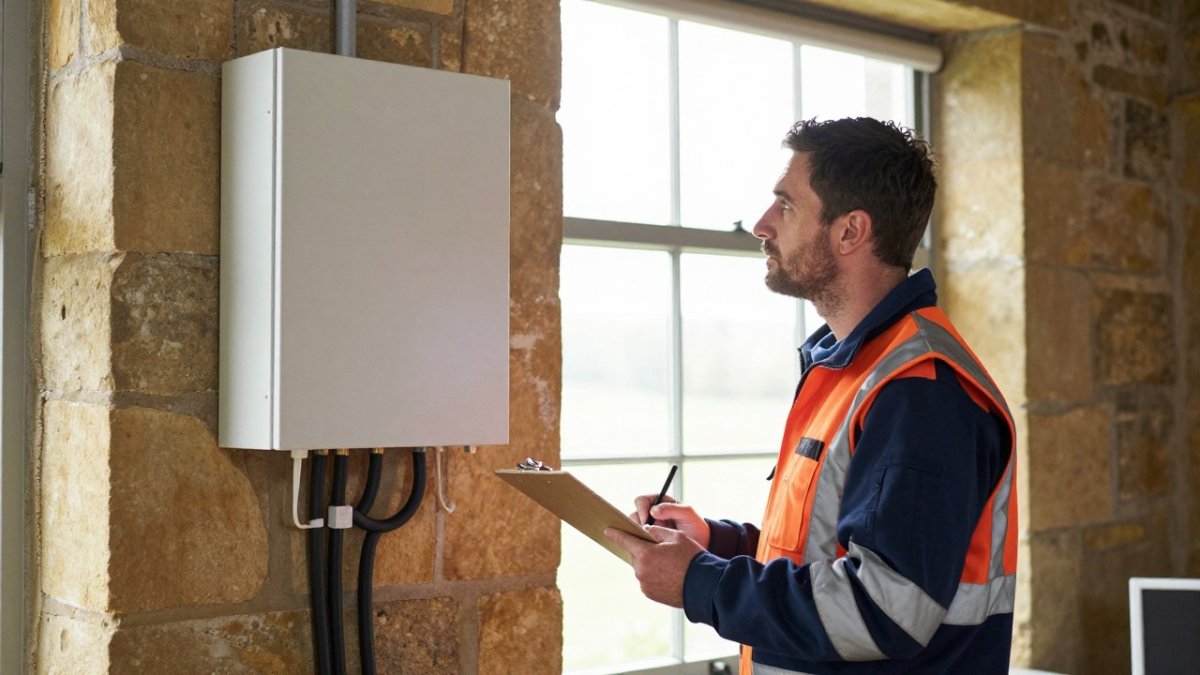
Run these checks before you commit:
- Confirm the incoming supply has spare capacity for the planned system and future growth.
- Check the plant room or battery location for frost risk, ventilation and ambient temperature.
- Verify the inverter has spare input capacity for additional battery modules.
- Confirm the battery management system supports documented, open communication protocols.
- Ask for the warranty terms in writing, including throughput limits and replacement conditions.
- Agree who handles removal and recycling at end of life.
- Check the controls platform can be reconfigured for new tariffs and smart functionality.
- Plan the cable routes and containment now, so a second battery cabinet can be added without rework.
If you are searching for battery storage installation near me in the Burnley area, ask any installer to walk you through these checks on site. For a view of the systems we install, see how we store your solar energy and cut your bills.
Book a free energy audit with Squirrel Energy
Our electrical engineers bring over 40 years of experience to every project, and we are MCS certified, Sunsynk and SolaX approved, and Smart Export Guarantee registered.
For readers in Burnley ready to act, our solar panel installation in Burnley page covers local solar and battery work and lets you book a free energy audit. If you are planning to scale up later, read how to budget for industrial battery storage installation costs before you brief your board. And if you are weighing support terms, our guide to what support commercial battery storage should include explains what to expect from a UK provider.
Design for that now, and the upgrade becomes a small job rather than a replacement.
Get started with Squirrel Energy and build a battery system that is still working for you in a decade.
A future-proof system is not the biggest one on the quote sheet.
Frequently Asked Questions
What does future-proofing a battery storage system mean?
It means specifying a system now that can still do its job in ten or fifteen years. In practice that covers four things: enough capacity headroom for future loads, an inverter and battery stack that accept additional modules, a battery management system that receives firmware updates and supports smart tariffs, and a design that keeps the wiring and mounting space ready for expansion. Future proofing battery storage is less about buying the biggest system today and more about avoiding choices that lock you out of upgrading later.
Can a battery storage system be expanded after installation?
Often yes, but only if it was designed that way. Scalable battery storage systems let you add battery modules to the existing inverter up to its rated limit, and some allow a second inverter to be paralleled later. The constraints are the inverter's maximum charge and discharge rating, the physical space left on the wall or plinth, and whether the original cabling and isolation were sized for the final build. Ask your installer what the maximum expandable capacity is before you sign, not after.
How long do commercial battery storage systems typically last?
Most lithium iron phosphate systems are warranted for around ten years or a stated number of charge cycles, whichever comes first, and many keep working usefully beyond that with reduced capacity. Battery storage system lifespan depends heavily on how the system is used: depth of discharge, temperature in the plant room, and how hard it is cycled each day. A well-designed system with good thermal control and sensible reserve settings will hold its capacity far better than one run flat twice a day.
Why should a specialist design and install a commercial battery storage system?
Because the difference between a system that pays back and one that does not usually sits in the design, not the hardware. A specialist looks at your half-hourly consumption data, your distribution network operator connection limits, your roof or land for solar generation, and your backup requirements, then sizes the battery and inverter around them. Squirrel Energy designs each system with electrical engineers who have over 40 years of experience, and provides a free energy audit and feasibility study before any equipment is specified.
